
Rehab Centers in California
3,031 SAMHSA-verified addiction treatment facilities across 8+ cities in the West region. Los Angeles alone lists 126 centers. Filter by insurance carrier, level of care, or substance — then call the program directly or our free helpline if you want help narrowing down.
On This Page
Quick answer — rehab in California
California has 3,031 licensed addiction treatment centers sourced from the SAMHSA federal registry. Medicaid is expanded here, covering detox, residential, IOP, and MAT programs for eligible residents. Top treatment hubs: Los Angeles (126 centers), San Diego (82 centers), San Francisco (64 centers), San Mateo (53 centers). Filter by insurance carrier, level of care, or substance, or call (833) 567-5838 for a free placement consultation with a licensed specialist.
Top cities for treatment in California
Three to eight metros concentrate most California addiction treatment capacity. Pick a city to see its full facility list with insurance filters.
California treatment centers
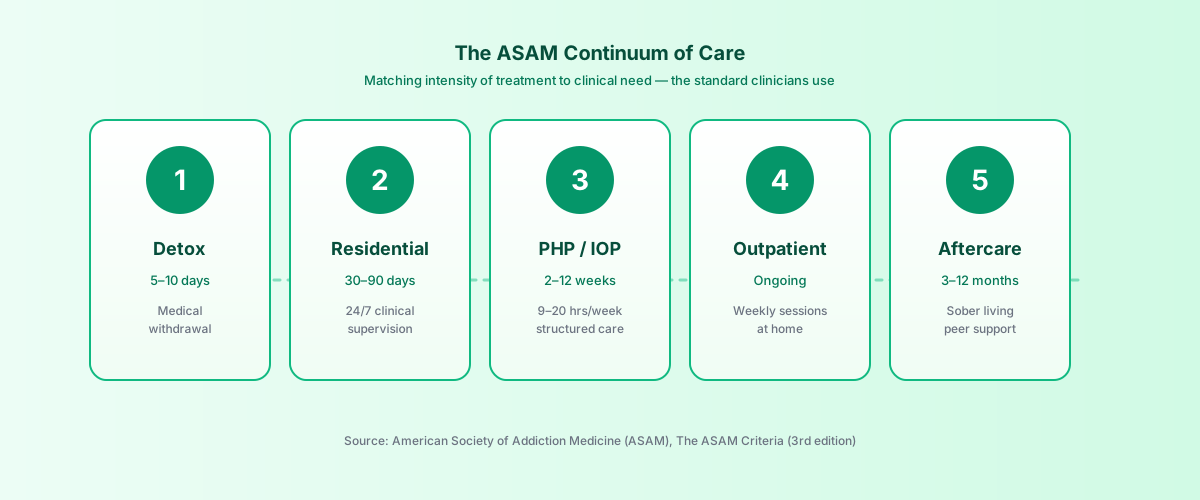
Levels of care available in California
Five ASAM-defined levels match treatment intensity to clinical need. All are available in California through the centers listed above.
Medical Detox
5–10 days of medically-supervised withdrawal management. Required for severe alcohol, benzo, or opioid dependence.
Learn more →Inpatient / Residential
30–90 days living onsite with 24/7 clinical supervision. Best for unstable home environments.
Learn more →Intensive Outpatient (IOP)
9–20 hours/week of structured therapy while living at home. Step-down from residential.
Learn more →Standard Outpatient
Weekly sessions fitting around work and family. Long-term relapse prevention.
Learn more →MAT (Medication-Assisted)
Buprenorphine, methadone, or naltrexone combined with counseling. Gold-standard for opioid use disorder.
Learn more →Dual Diagnosis
Co-occurring mental health + addiction treatment. Integrated care for depression, PTSD, anxiety + SUD.
Learn more →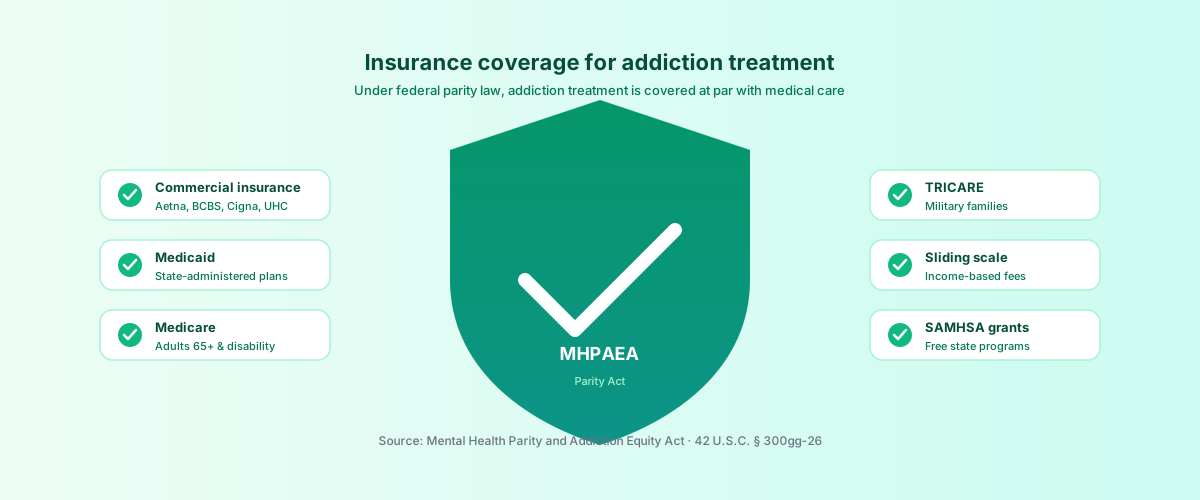
Insurance coverage in California
Under the Mental Health Parity and Addiction Equity Act (MHPAEA), commercial insurers in California must cover addiction treatment at parity with medical care. Because California expanded Medicaid under the ACA, residents at or below 138% of the federal poverty line have broad coverage for detox, residential, outpatient, and MAT programs.
Filter centers by specific carrier to see in-network options:
Typical costs without insurance
Five self-pay ranges map to the ASAM care levels — from $1,000/month outpatient to $80,000/month luxury residential. California programs cluster toward the upper end in major metros and the lower end in rural areas. Sliding-scale options are available in roughly 15% of listings.
| Level of care | Typical range |
|---|---|
| Outpatient | $1,000–$3,000/month |
| IOP / PHP | $3,500–$10,000/month |
| 30-day residential | $5,000–$20,000 |
| 90-day inpatient | $12,000–$60,000 |
| Luxury residential | $30,000–$80,000/mo |
California policy & overdose data
Four public-health indicators that directly affect treatment access and overdose risk in California: overdose rate, substance use prevalence, naloxone availability, and Good Samaritan legal protection. Data updated April 2026.
Rank #28 of 50. 7,385 opioid deaths in 2022.
Adults with substance use disorder (NSDUH 2023).
Free from pharmacies, health departments, and harm-reduction orgs.
Legal protection when calling 911 during overdose.
In crisis? Help is immediate.
Immediate danger: call 911. Suicide or mental-health emergency: dial or text 988. Free SAMHSA treatment referrals 24/7: 1-800-662-HELP (4357). Placement help: (833) 567-5838.
How to get started in California
Three steps separate "I need help" from "I’m in a program." Most placements finish step three within 24–72 hours — faster with our helpline.
Identify the right level of care
Two questions sort it: can you stop safely for 24 hours without medical help (if no, start with medical detox), and is home stable (if no, residential; if yes, outpatient or IOP).
Verify your insurance coverage
Under MHPAEA, commercial plans cover addiction care at parity with medical. Use the form below for a 5-minute confidential benefits check, or call us directly.
Contact a center & admit
Pick a facility from the listing above or let a placement specialist narrow down 3,031 options by your insurance, location, and preferred level of care — free, confidential.
Free insurance benefits check
A licensed placement specialist will verify in-network options in California, typical out-of-pocket costs, and level-of-care eligibility. Results in under 10 minutes.
FAQ — rehab in California
How many rehab centers are in California?
Does California Medicaid cover rehab?
What is the overdose rate in California?
What are the top cities for rehab in California?
Does California have a Good Samaritan Law?
How to find free rehab in California?
How much does rehab cost in California without insurance?
How do I choose a rehab in California if I’ve never been through treatment?
Finding treatment in California
All 3,031 facilities listed above are pulled from the federal SAMHSA Behavioral Health Treatment Services Locator, which every licensed addiction and mental-health program must report to. We sync the roster monthly, cross-check contact numbers quarterly, and drop facilities that close, disconnect, or leave the SAMHSA registry within a single sync cycle. Each listing carries the same three baseline checks: the center is active in SAMHSA, its phone number answered on our last call, and its level-of-care and insurance tags mirror what the facility self-reports federally.
The right level of care depends on two clinical variables placement specialists assess first: withdrawal severity and home-environment stability. If alcohol, benzodiazepines, or opioids have been used daily in the past month, medical detox is usually required before any other step — withdrawal from those three classes can be dangerous without supervision. If the home environment is supportive (family sober, no trigger access, work or school flexible), outpatient or IOP usually covers it. If home is chaotic or actively triggering, residential makes the rest of treatment possible by removing the immediate access problem.
How California Medicaid handles rehab
Because California expanded Medicaid under the Affordable Care Act, adults earning at or below 138% of the federal poverty line qualify automatically. Coverage includes detox, residential, PHP/IOP, standard outpatient, and MAT (methadone, buprenorphine, naltrexone). Prior authorization is usually required for residential stays beyond 30 days, but MAT is normally covered without it. Filter the directory by Medicaid to see centers in the California provider network, or call (833) 567-5838 for a free, zero-commitment benefits check.
Commercial insurance & parity law
Under the federal Mental Health Parity and Addiction Equity Act (MHPAEA, 2008), commercial insurers that cover mental-health or addiction services must do so at parity with medical care — the same copay tier, the same day limits, the same prior-auth requirements. In practice, this means Aetna, BlueCross BlueShield, Cigna, and UnitedHealthcare plans sold in California generally cover residential, IOP, and MAT when medically necessary. Verification takes under five minutes if you have the member ID handy.
What to check on any California facility
Three questions separate legitimate programs from pay-to-play marketers. First, is the center accredited by JCAHO or CARF? Both are national bodies that audit clinical protocols, medication handling, and patient outcomes — accreditation is not required by law but is the strongest non-government quality signal. Second, does the center employ licensed clinicians (LCSW, LMFT, LPC, LADC, MD) rather than only "recovery coaches" or peers? Peer support has value, but clinical care requires licensed staff. Third, does the center disclose outcomes data — completion rates, 30/90/365-day sobriety rates, readmission rates? Most will hedge; the few that publish numbers are worth a closer look. For independent outcome benchmarks by treatment type, review NIDA's research-based principles.
Nearby states
Five reasons residents consider cross-border programs: wider provider networks, specialized luxury or gender-specific facilities, insurance portability via MHPAEA, out-of-state privacy, and shorter waitlists. All listings below are SAMHSA-verified.
Sources & methodology
- SAMHSA — Behavioral Health Treatment Services Locator. findtreatment.gov. Primary source for facility records (accessed April 2026).
- SAMHSA — 2023 National Survey on Drug Use and Health (NSDUH). Overdose rates, SUD prevalence.
- CDC — Wide-ranging ONline Data for Epidemiologic Research (WONDER). Opioid death counts.
- Kaiser Family Foundation — Medicaid expansion tracker, state-by-state policy data.
- Mental Health Parity and Addiction Equity Act (MHPAEA) — 42 U.S.C. § 300gg-26. U.S. Department of Labor summary.
Last verified April 2026. Directory sync: monthly. This page is informational and not a substitute for professional medical advice. Always call 911 in an emergency.
Need help narrowing down California options?
Free, confidential, 24/7. A licensed placement specialist will filter California centers by your insurance, preferred level of care, and location in under 10 minutes.
Call (833) 567-5838